As global health crises and pollution strain healthcare systems, governments enforce stringent measures and interventions to promote proactive, holistic health. As individuals, we have a greater understanding of nutrition's impact on the body and mind, and we integrate these proactive health approaches into everything we do, allowing us to live better for longer.

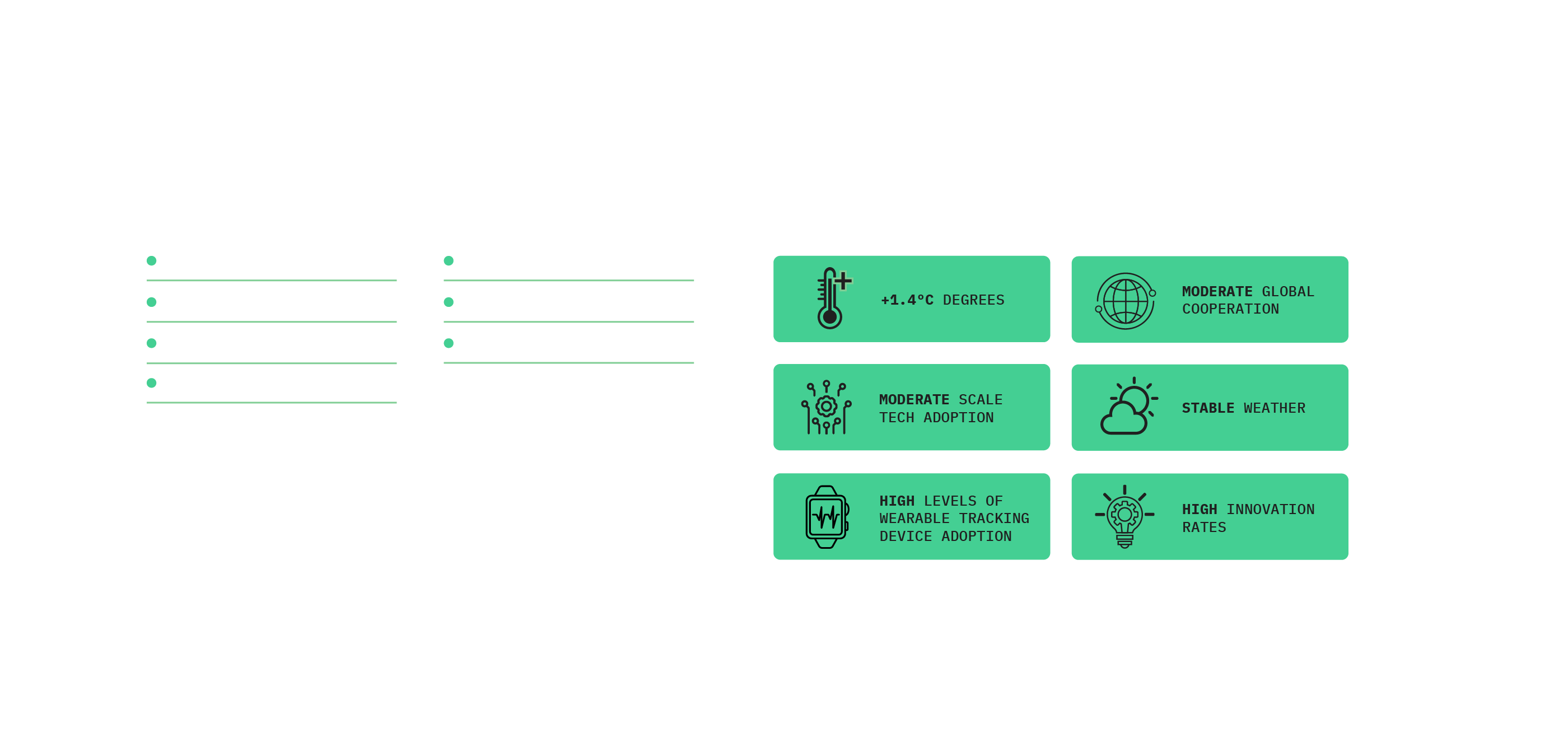





Digital transformation has revolutionized business models, governments, and societies,profoundly impacting the food industry value chain. Throughout the 2020s, rapid technological advancements have spurred radical innovation across all sectors. AI-powered super-apps have become essential in daily life, with businesses slow to adapt to these new technologies being left behind.

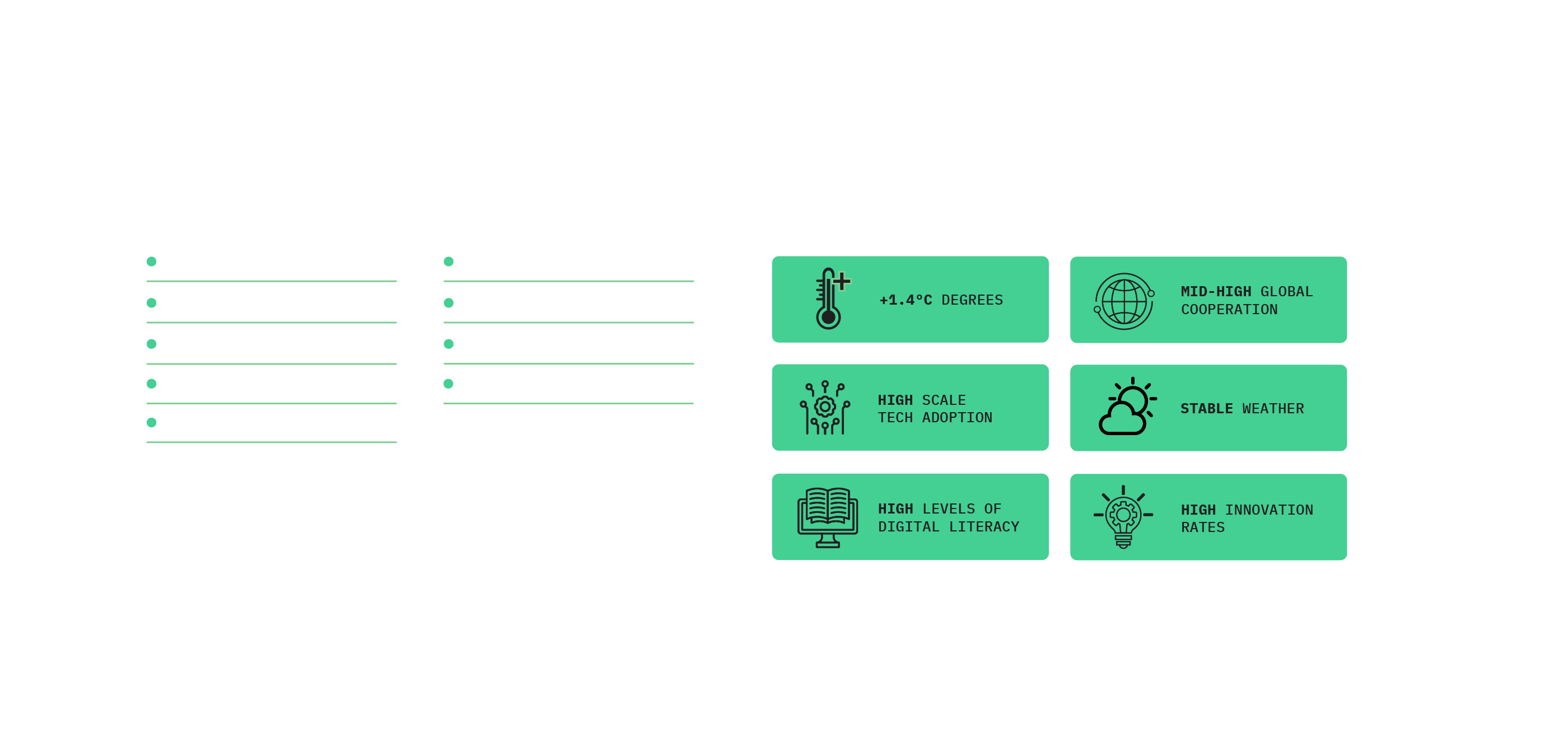





Our enhanced understanding of mental health and consciousness is transforming experiences and emotions, making pleasure-focused interactions mainstream. As the world shifts into the virtual realm, humanity explores new sensory heights in both virtual and physical domains.The blurring of these experiences leads to a democratization of hedonism, allowing everyone to seek meaning, discovery, and escapism.

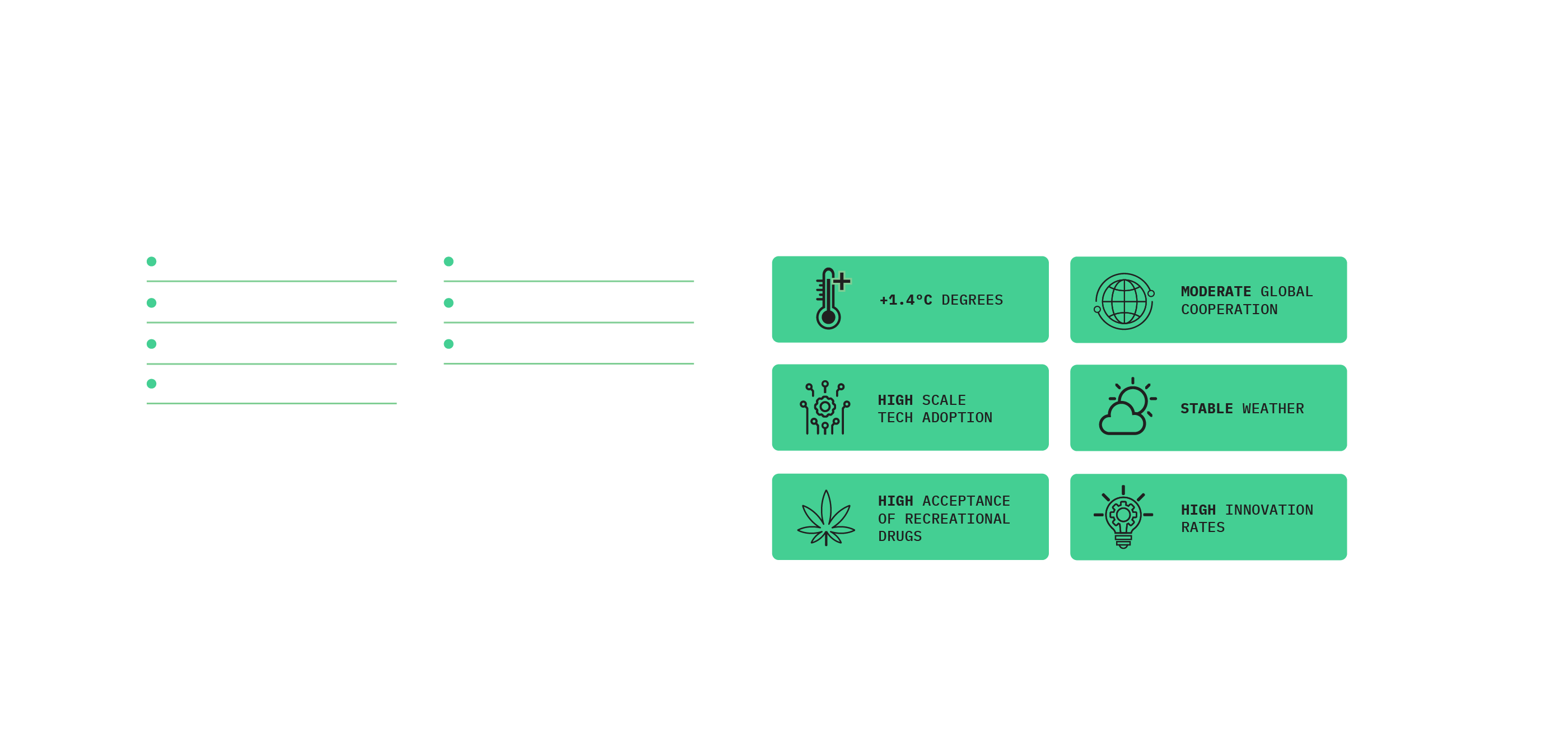





In response to the severe depletion of Earth's natural and agricultural resources due to climate degradation, a revolutionary modern food system has emerged. Enabled by mass scientific advancements, this high-tech system produces superior, lower-cost food with minimal external impacts on society and the environment which helps to sustain the demands of exponential population growth.
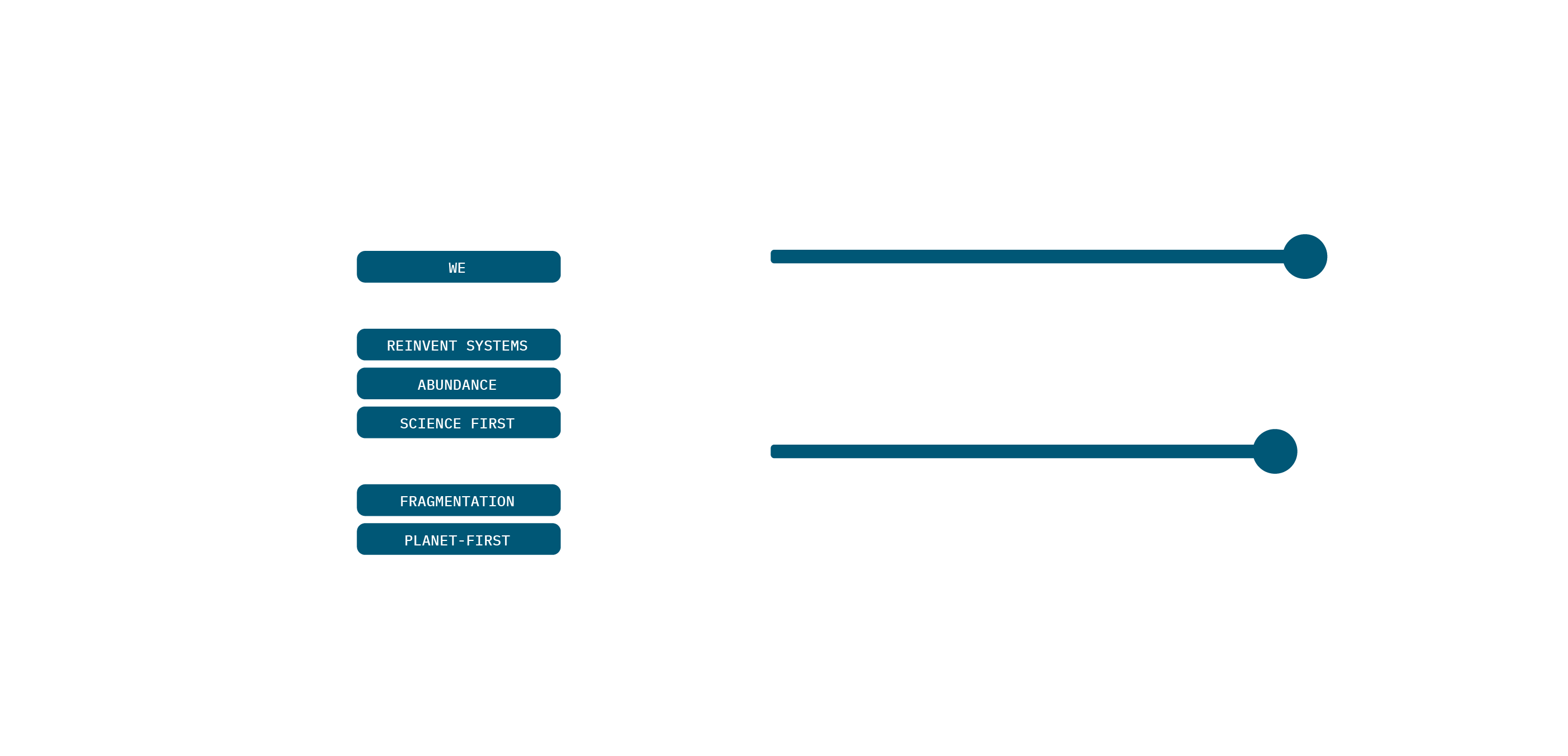
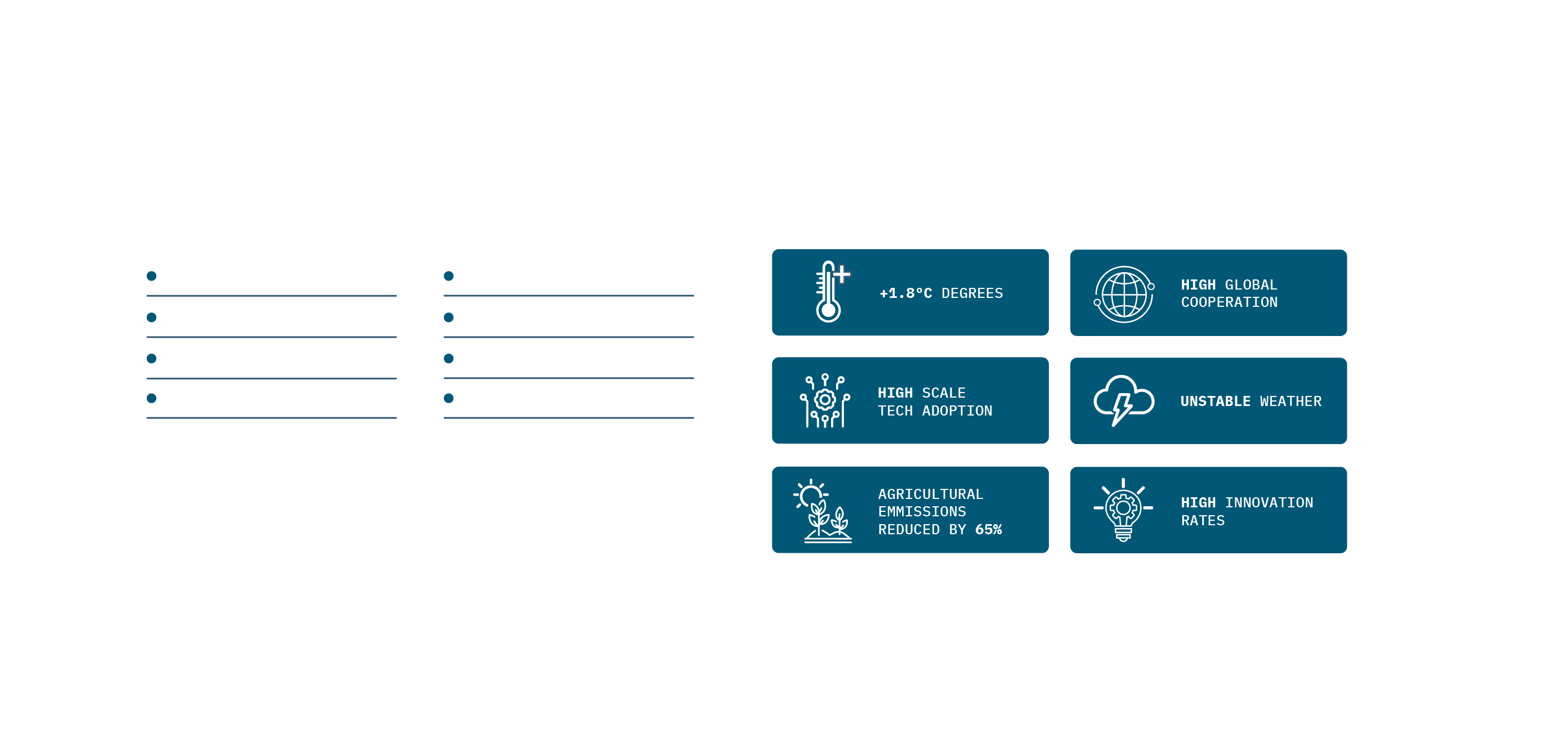





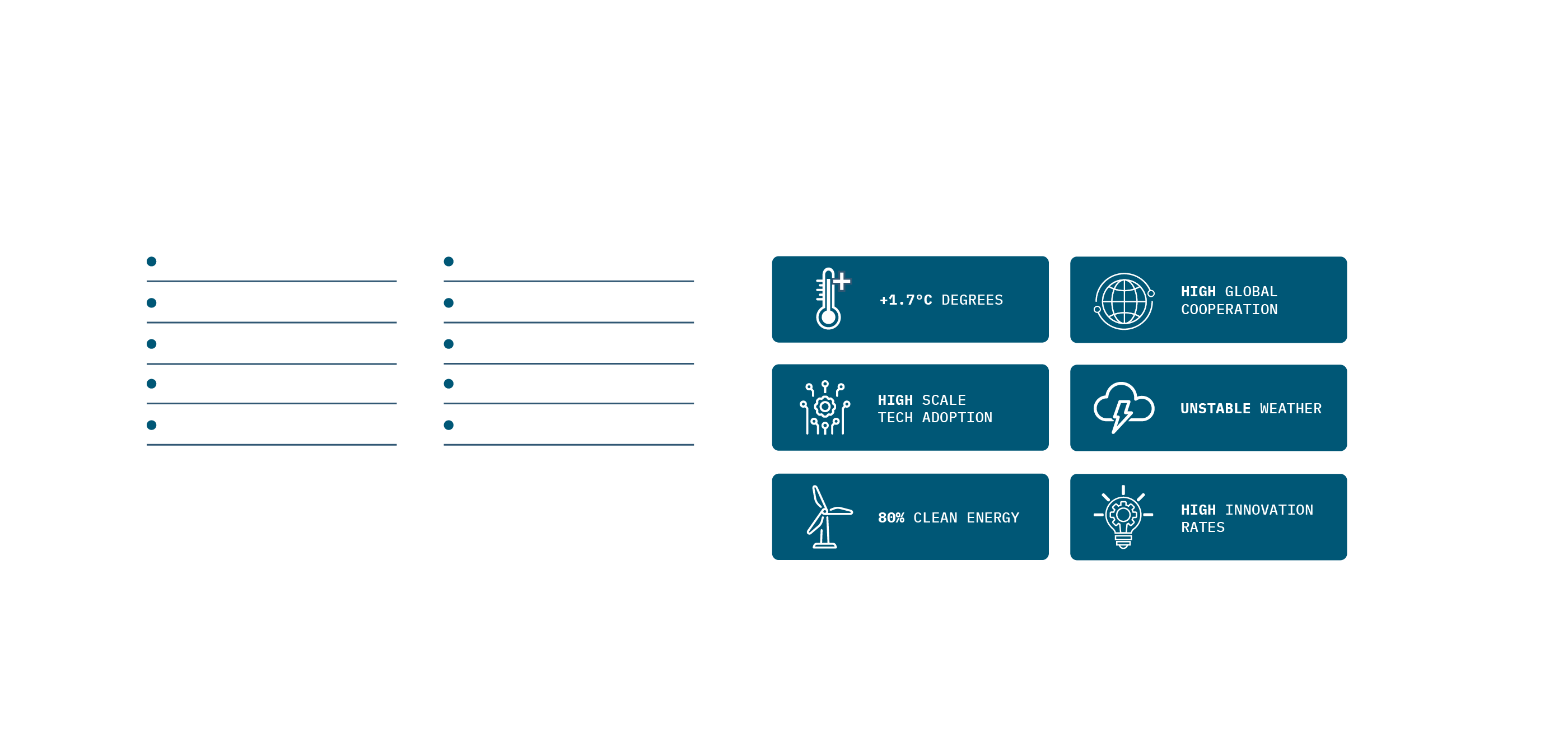
Due to impending climate catastrophe and strict regulatory measures, society has transitioned from a degenerative, extractive model to a regenerative, circular, and decarbonized system. This new approach emphasizes yielding social and environmental benefits, driving resilience and efficiency. And by designing nature-positive systems, we move beyond merely mitigating damage to actively restoring and enhancing ecosystems.
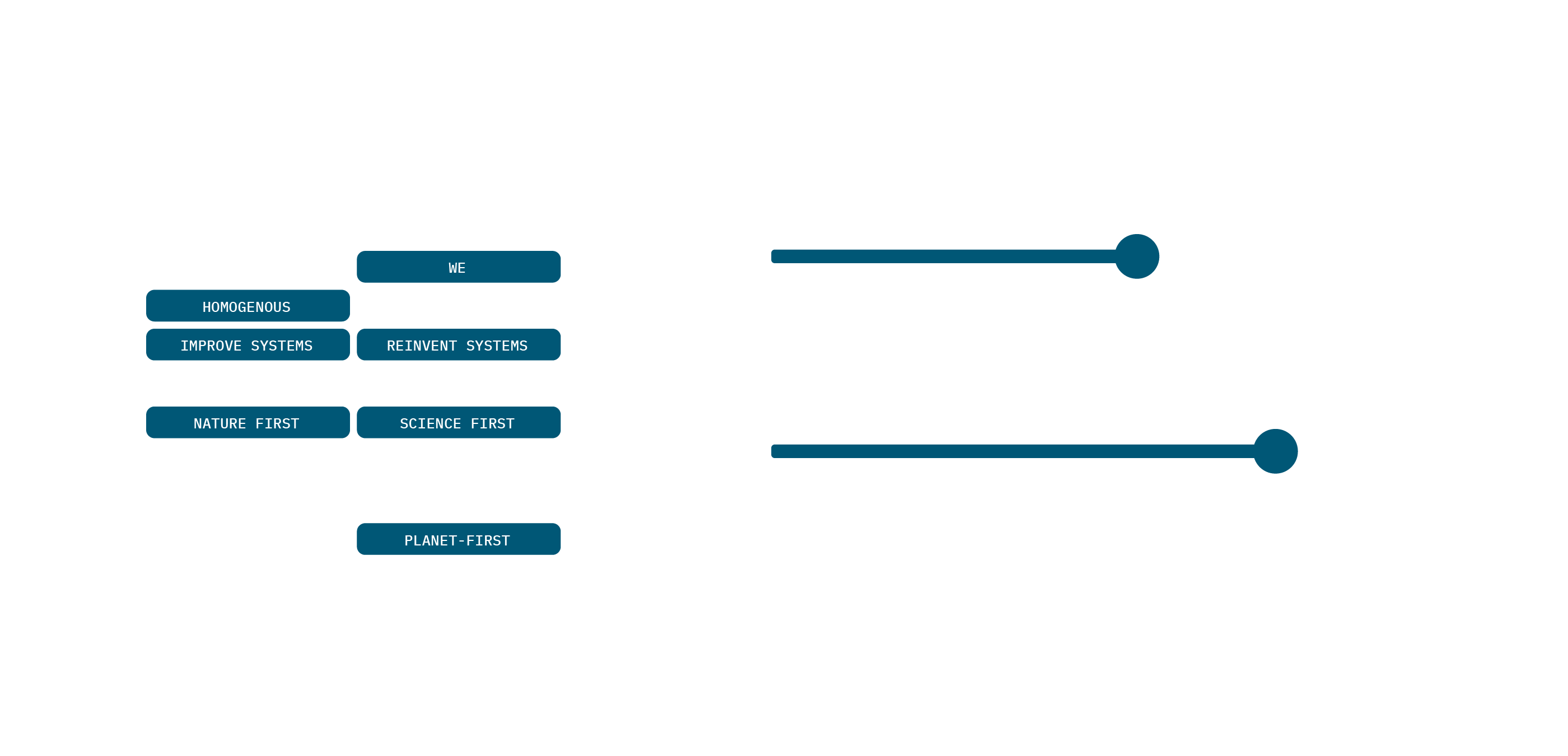





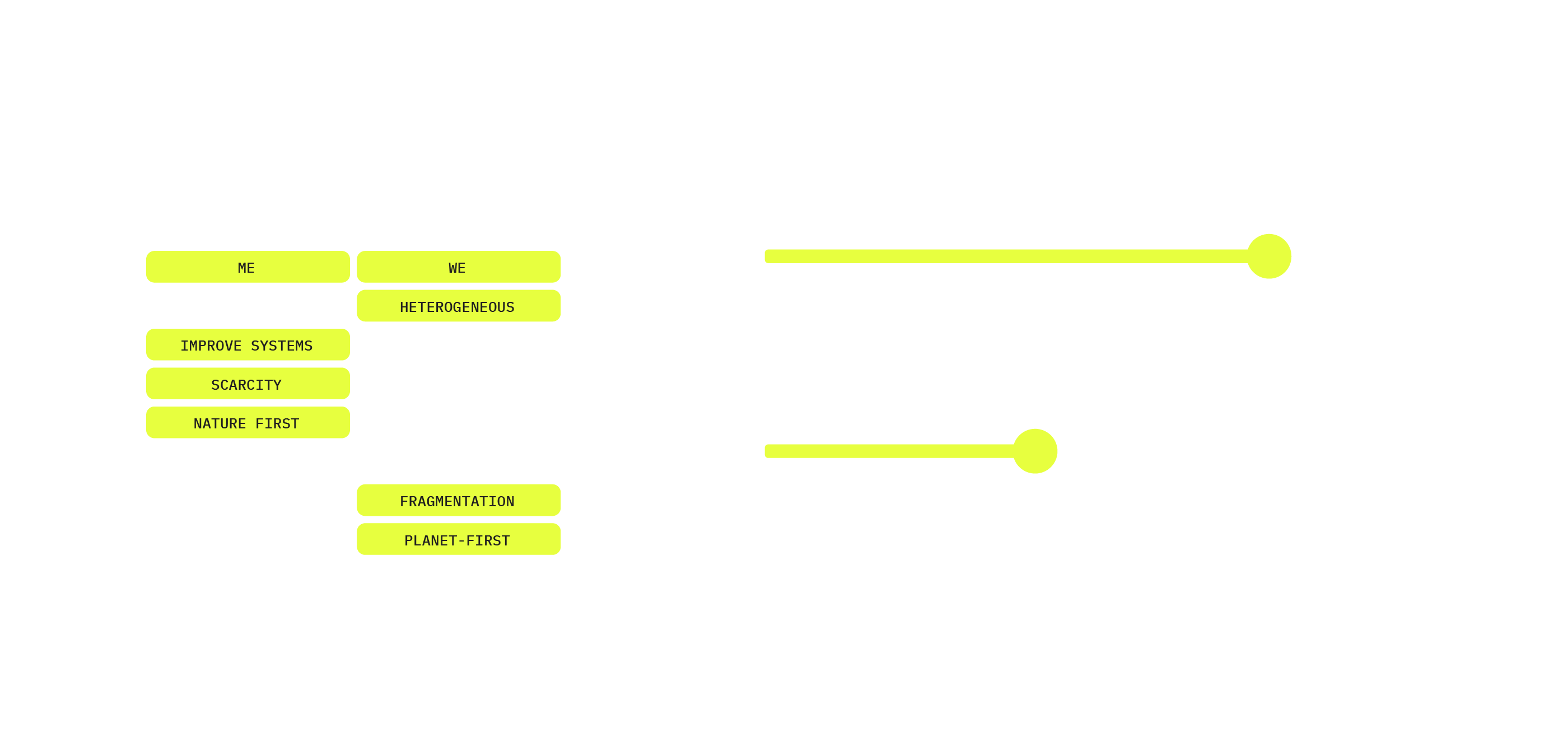
We find ourselves in converging poly-crises marked by climate inaction, resource shortages, geopolitical turmoil, and economic instability; societies face high threats and deep inequality. Amidst civil unrest and new world disorder, and as the basic human need for survival and pleasure persists, those who adapt and thrive with less find opportunities.

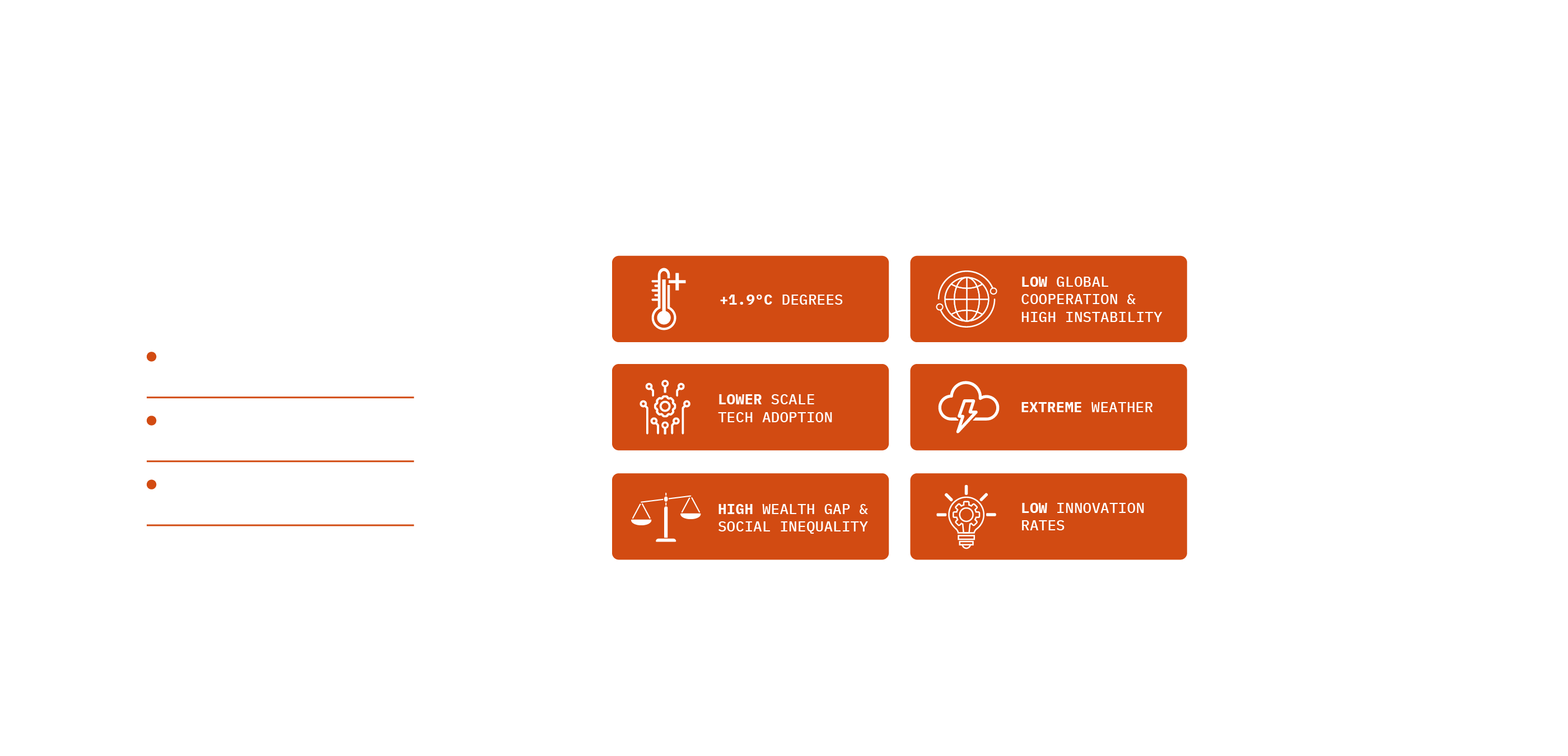






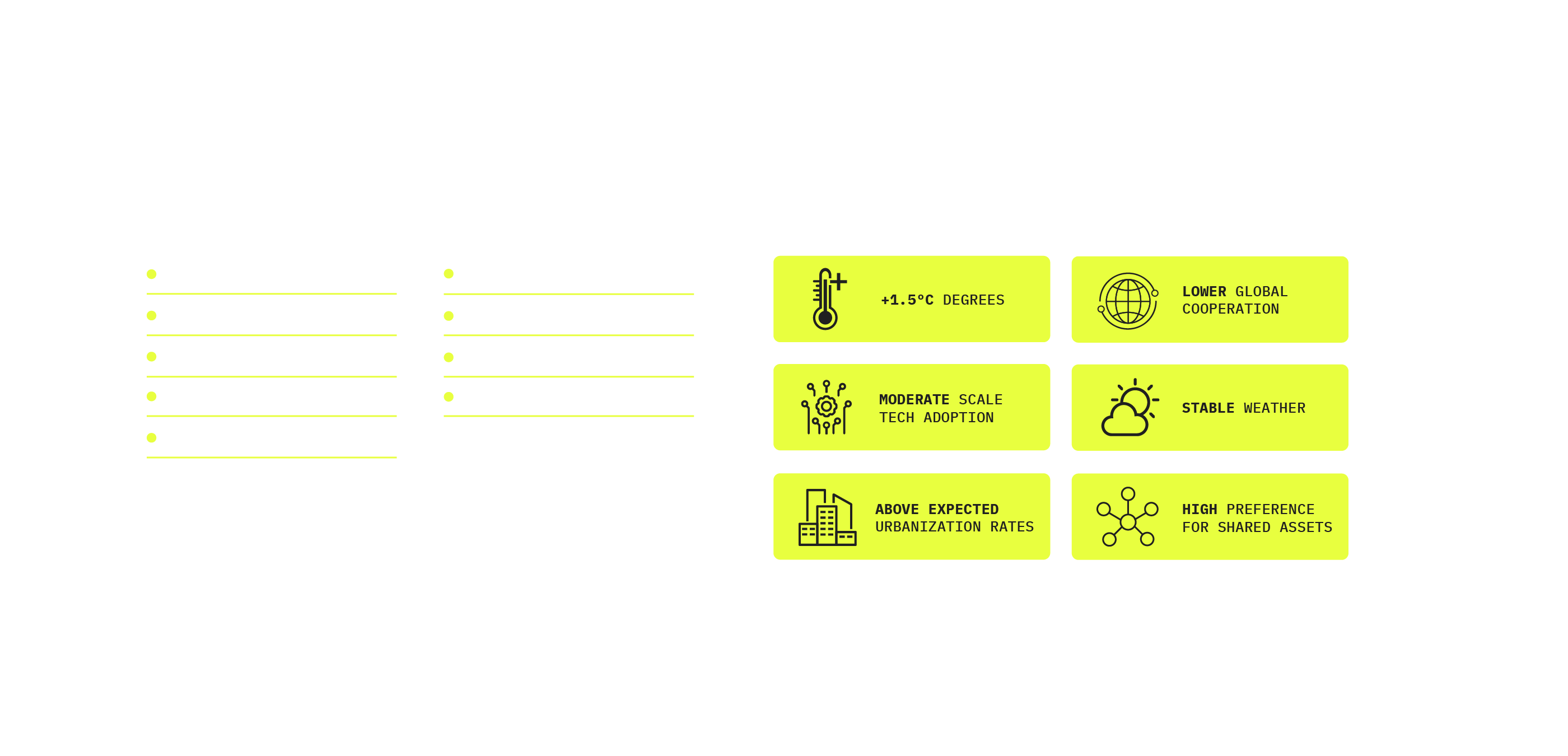
Amid turbulence and complexity, societies consciously downsize and decouple, seeking certainty and resilience through local sourcing and consumption. Deglobalization and stagnant mature economies give rise to fragmented, self-sufficient communities. As unchecked consumption declines to prevent climate catastrophe, a new era of localized living and cultural appreciation reshapes urban spaces to prioritize proximity to amenities.